
Two Different Approaches to Depression Care
Many patients researching ketamine vs antidepressants have already tried one or more antidepressants. Some received partial relief. Others experienced side effects, slow response, or little improvement. This often leads to an important question: how is ketamine different from traditional antidepressants?
Ketamine and antidepressants are not interchangeable. They work differently, are given differently, and are used in different clinical contexts. Understanding the difference helps patients ask better questions and make more informed decisions with their healthcare team.
How Traditional Antidepressants Work
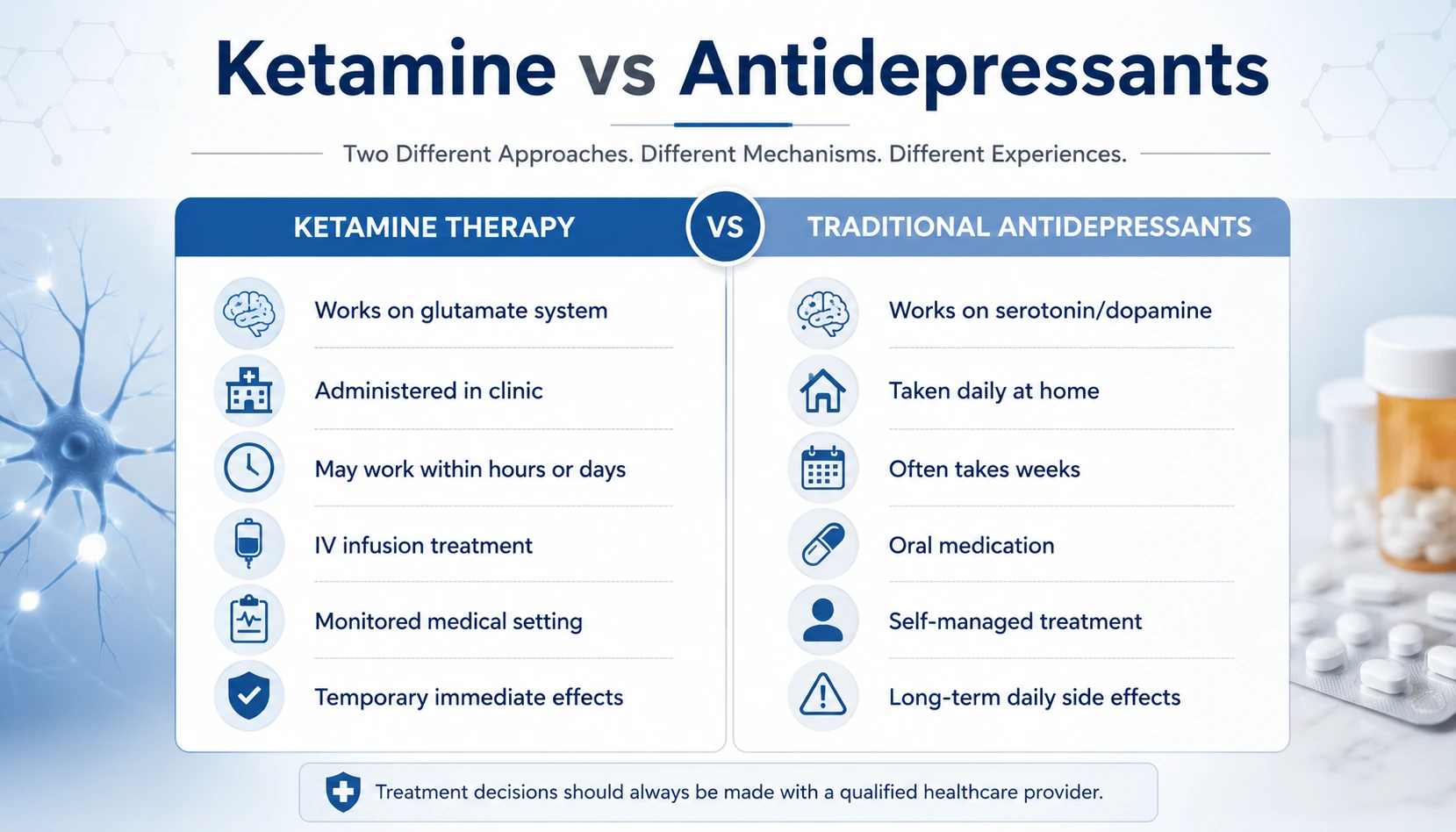
Many common antidepressants affect serotonin, norepinephrine, or dopamine signaling. These medications may help regulate mood, anxiety, sleep, appetite, and energy over time. They are often taken daily and may take several weeks before benefits are clear.
Traditional antidepressants can be very helpful, but not every patient responds. Some people need multiple trials, dose changes, or medication combinations before finding a good fit. Others continue to experience depression symptoms despite appropriate treatment.
Ketamine Vs Antidepressants: How Ketamine Works Differently
Ketamine affects the glutamate system and NMDA receptors. Glutamate is one of the brain’s major signaling chemicals and is involved in neural communication, learning, memory, and neuroplasticity. This different pathway is one reason ketamine is discussed for treatment-resistant depression.
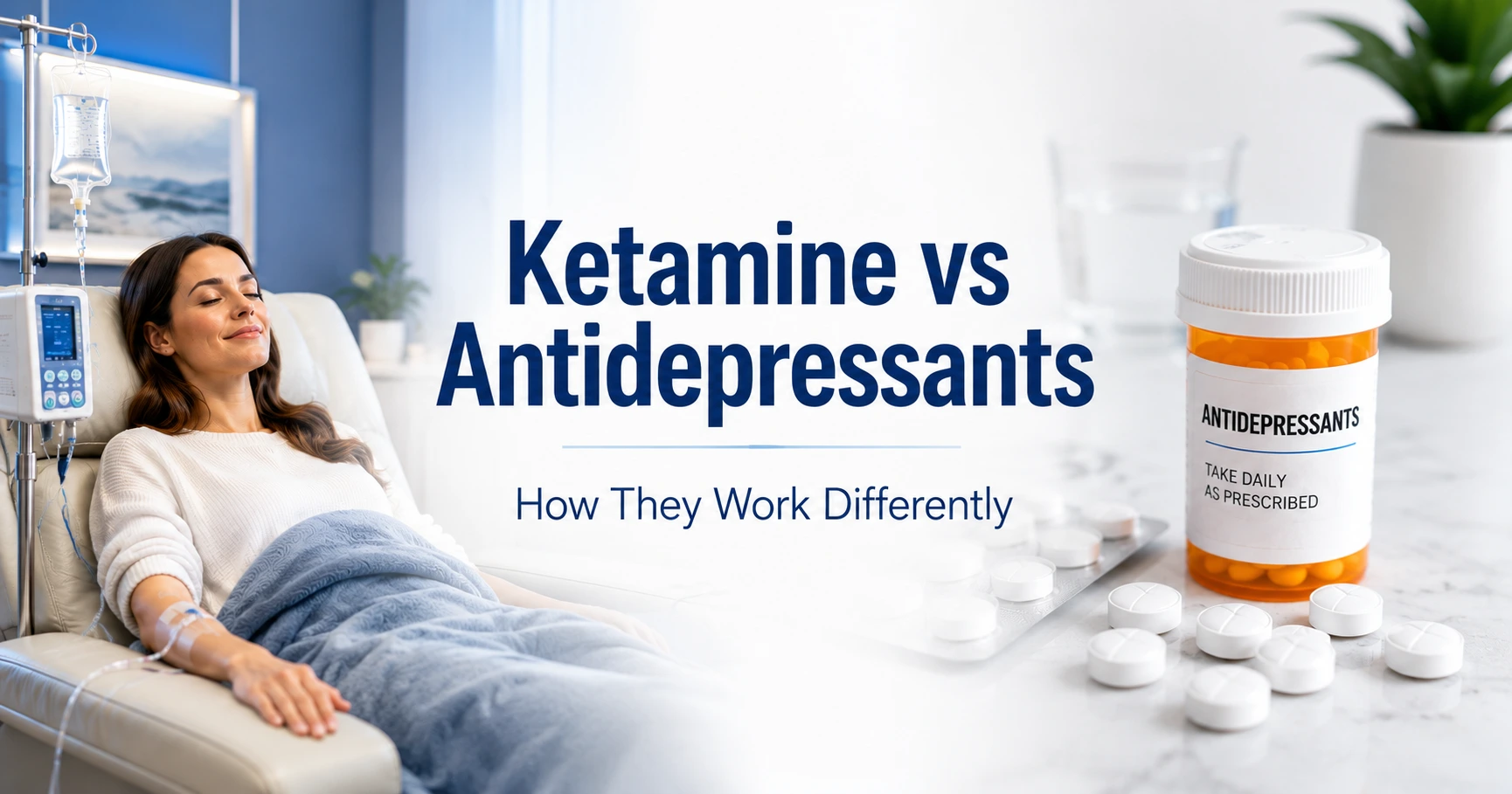
Ketamine therapy is typically administered in a clinical setting, often through IV infusion. The treatment is supervised, monitored, and planned as a series for selected patients rather than taken daily at home.
Timeline: Weeks vs. Potentially Faster Response
Traditional antidepressants often take weeks to show full benefit. Ketamine may produce changes more quickly for some patients, sometimes within hours or days. However, response varies and ketamine is not guaranteed.
Patients should think less in terms of “instant cure” and more in terms of monitored response. Improvement may appear as reduced rumination, more emotional flexibility, better sleep, or improved function.
Treatment Setting
Antidepressants are usually prescribed for home use. Ketamine infusion therapy occurs in a monitored clinical environment. This matters because ketamine can temporarily affect perception, blood pressure, coordination, and emotional state.
A supervised setting allows the care team to monitor symptoms, comfort, and safety during treatment and recovery.
Side Effect Differences
Traditional antidepressants may cause side effects such as nausea, sexual dysfunction, sleep changes, weight changes, emotional blunting, or gastrointestinal symptoms. Ketamine side effects are usually more immediate and temporary, such as dizziness, nausea, dissociation, blood pressure changes, or fatigue after treatment.
Both treatment categories require medical oversight. Neither should be started, stopped, or changed without provider guidance.
Who Might Consider Ketamine?
Ketamine may be considered for selected patients with treatment-resistant depression, especially when standard medications have not provided enough relief. It may also be discussed when depression overlaps with chronic pain, PTSD, anxiety, or severe functional impairment.
Screening is essential. Patients with certain medical or psychiatric risks may need additional evaluation or may not be candidates.
Can Ketamine and Antidepressants Be Used Together?
Sometimes patients continue existing medications while receiving ketamine therapy, but this depends on the medication, diagnosis, safety factors, and provider judgment. Patients should never stop antidepressants suddenly or change medication plans without the prescribing clinician.
Questions to Ask Your Provider
Before choosing a treatment path, ask:
– Why might ketamine be appropriate for my case?
– Should I continue my antidepressant?
– How will response be measured?
– What side effects are most relevant to me?
– How many sessions are recommended?
– What happens if symptoms worsen?
– How will my therapist or psychiatrist be involved?
FAQ: Ketamine vs Antidepressants
Is ketamine an antidepressant?
Ketamine is not a traditional daily antidepressant, but it may have antidepressant effects for selected patients under medical supervision.
Does ketamine replace my medication?
Not necessarily. Medication decisions should be made with your prescribing clinician.
Is ketamine faster than SSRIs?
Some patients report faster improvement with ketamine, but results vary and response is not guaranteed.
Is ketamine right for everyone with depression?
No. Ketamine requires screening and is not appropriate for every patient.
Can ketamine help emotional numbness?
Some patients report changes in emotional flexibility, but this depends on the individual and should be evaluated clinically.
Conclusion: Different Tools for Different Patients
Traditional antidepressants and ketamine therapy approach depression through different pathways. For patients who have not improved enough with standard treatment, ketamine may be worth discussing with a qualified provider.
If antidepressants have not provided enough relief, schedule a consultation with SoCal Infusions to learn whether ketamine therapy may be appropriate.
This article is educational and does not replace medical advice. Do not stop or change medications without speaking with your healthcare provider. Seek emergency help for suicidal intent or inability to stay safe.