

Is Ketamine Therapy Safe Without Medical Screening?
Ketamine can temporarily affect blood pressure, heart rate, perception, coordination, mood, and level of awareness. For many patients, these effects are manageable in a supervised clinical environment. For others, certain risks may make treatment inappropriate or require additional review.
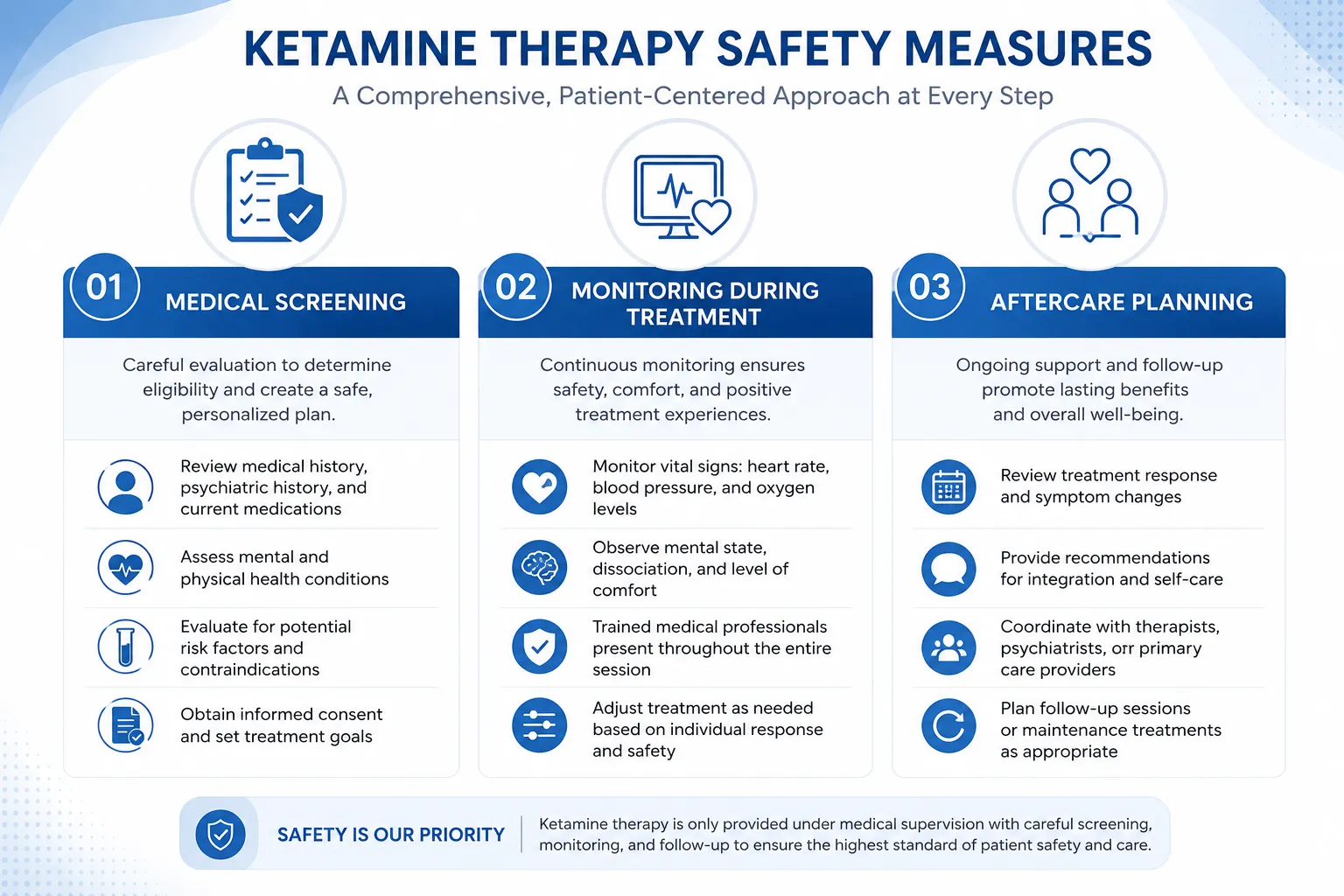
A screening process may include:
- Review of medical history.
- Review of psychiatric history.
- Medication and supplement review.
- Blood pressure and cardiovascular risk review.
- Substance use history.
- Pregnancy status when relevant.
- Prior reactions to anesthesia or sedating medications.
- Discussion of support and transportation after treatment.
Patients interested in learning more about ketamine and mental health treatment can review information from the National Institute of Mental Health.
Common Temporary Side Effects
Ketamine side effects are usually temporary, but they should still be taken seriously. Patients may experience:
– Nausea or vomiting.
– Dizziness or lightheadedness.
– Temporary increase in blood pressure.
– Sleepiness or fatigue.
– Dissociation or dreamlike perception.
– Anxiety during the experience.
– Blurred vision or altered sensory perception.
– Headache.
– Unsteadiness after treatment.
Because these effects can affect coordination and judgment, patients should not drive after ketamine treatment.
Who May Not Be a Good Candidate?
Ketamine therapy may not be appropriate for everyone. Additional caution may be needed for patients with uncontrolled high blood pressure, certain heart conditions, active psychosis, uncontrolled mania, pregnancy, serious substance use concerns, or medications that may interact with treatment.
This does not mean every patient with a complex history is automatically excluded. It means the provider must review risks carefully and decide whether treatment is appropriate.
How Medical Monitoring Helps Keep Ketamine Therapy Safe
During an IV ketamine infusion, the care team can monitor the patient’s comfort, vital signs, and response. This is one advantage of a medically supervised infusion setting. If nausea, anxiety, blood pressure changes, or discomfort occurs, the team can respond.
Monitoring may include:
– Blood pressure checks.
– Pulse and oxygen monitoring when appropriate.
– Observation of sedation level and comfort.
– Communication with the patient during treatment.
– Recovery monitoring before discharge.
Patients should know who will be present during the infusion and what safety protocols are in place.
Mental Health Safety Considerations
Many patients seek ketamine for serious depression, PTSD, anxiety, or suicidal thoughts. These symptoms deserve careful care planning. Ketamine may be considered in some treatment-resistant cases, but patients also need crisis planning, therapy or psychiatric support when appropriate, and clear instructions for worsening symptoms.
Ketamine should not replace emergency mental health care. If a patient is in immediate danger, experiencing active suicidal intent, or unable to stay safe, emergency services or crisis support are needed.
How to Reduce Risk Before and After Treatment
Patients can support safety by following instructions carefully:
– Share a complete medication list.
– Tell the team about substance use, pregnancy, or recent health changes.
– Follow fasting and medication instructions.
– Arrange a responsible ride home.
– Avoid alcohol or recreational substances before and after treatment.
– Keep the rest of the day low-pressure.
– Report unusual or severe symptoms immediately.
– Continue working with outside providers when needed.
Ketamine therapy works best when patients are honest during screening and supported after treatment.
Questions to Ask a Ketamine Clinic
Before starting treatment, ask:
– Who determines whether I am a candidate?
– Who monitors me during the infusion?
– What vital signs are monitored?
– What side effects are common?
– What medical conditions could make treatment unsafe?
– What happens if I feel anxious or nauseated?
– Can you coordinate with my therapist, psychiatrist, or physician?
– What should I do if symptoms worsen after treatment?
A clinic should welcome these questions.
FAQ: Ketamine Therapy Safety
Is ketamine therapy safe?
Ketamine therapy may be safe for appropriately screened patients in a medically supervised setting, but it is not risk-free and is not appropriate for everyone.
Can ketamine raise blood pressure?
Yes, ketamine can temporarily increase blood pressure in some patients. Blood pressure screening and monitoring are important.
Can ketamine make anxiety worse?
Some patients may feel anxious during the altered state. Preparation, reassurance, and clinical support can help, but patients with certain psychiatric histories need careful evaluation.
Can I drive after treatment?
No. Patients should arrange transportation and avoid driving after ketamine therapy.
What should I do in a crisis?
If you are in immediate danger or experiencing suicidal intent, call 988 in the United States or seek emergency care right away.
Understanding whether ketamine therapy is safe requires careful review of medical history, treatment goals, and ongoing monitoring throughout the care process.
Conclusion: Safe Ketamine Care Starts With Screening
Ketamine therapy should be guided by medical judgment, not guesswork. The safest care includes screening, monitoring, patient education, realistic expectations, and appropriate follow-up.
If you are considering ketamine therapy in Pasadena, schedule a consultation with SoCal Infusions to discuss your medical history, treatment goals, and whether ketamine may be appropriate for you.
This article is educational and does not replace medical advice, diagnosis, or treatment. If you are experiencing a medical or mental health emergency, seek emergency help immediately.