
Ketamine for PTSD: How It May Support Trauma Recovery
PTSD can affect nearly every part of a person’s life. For some individuals, trauma changes sleep patterns, emotional regulation, stress responses, concentration, and even physical health. Flashbacks, nightmares, hypervigilance, emotional numbness, anxiety, and chronic tension may continue long after a traumatic event has passed.
While traditional PTSD treatments such as therapy and medication help many people, others continue struggling with persistent symptoms. In recent years, ketamine therapy has gained attention as a potential option for selected patients dealing with trauma-related symptoms, depression, anxiety, and nervous system dysregulation.
At SoCal Infusions, ketamine therapy is approached carefully and responsibly as part of a broader trauma-informed care plan. It is not considered a cure for PTSD, but it may support some patients who have not found enough relief through standard treatment approaches.
Understanding PTSD and the Nervous System
Post-traumatic stress disorder (PTSD) affects both the brain and body. Trauma can leave the nervous system in a constant state of alertness, often called “fight-or-flight” activation.
Common PTSD symptoms may include:
- Flashbacks or intrusive memories
- Nightmares
- Hypervigilance
- Panic or anxiety
- Emotional numbness
- Sleep disruption
- Irritability
- Avoidance behaviors
- Difficulty concentrating
- Chronic body tension
For some individuals, PTSD overlaps with depression, chronic pain, or severe anxiety, making daily functioning even more difficult.
Trauma recovery often requires a combination of therapies, emotional support, nervous system regulation, and medical care tailored to the individual.
What Is Ketamine Therapy?
Ketamine was originally developed as an anesthetic medication. Today, medically supervised ketamine infusion therapy is sometimes used for selected patients experiencing treatment-resistant depression, chronic pain, PTSD symptoms, and severe anxiety.
Ketamine works differently from traditional antidepressants. Rather than targeting serotonin alone, ketamine affects glutamate signaling and NMDA receptors in the brain. Researchers believe this may influence neuroplasticity, mood regulation, and emotional processing.
Some patients report experiencing temporary relief from rigid thought patterns, emotional heaviness, or chronic stress responses during ketamine therapy.
How Ketamine May Support PTSD Recovery
Ketamine therapy does not erase traumatic memories or “cure” PTSD. However, some patients describe feeling less emotionally overwhelmed or more capable of engaging in therapy after treatment.
Potential benefits reported by selected patients include:
- Reduced emotional intensity
- Temporary relief from anxiety
- Less rumination
- Improved mood
- Better emotional flexibility
- Increased openness during therapy
- Reduced feelings of hopelessness
- Temporary relief from body tension
Because PTSD affects each individual differently, treatment responses can vary significantly.
At SoCal Infusions, treatment success is evaluated based on meaningful improvement in daily functioning and quality of life rather than the intensity of the treatment experience itself.
Ketamine and Neuroplasticity
One reason ketamine therapy has received attention in mental health care is its potential relationship to neuroplasticity.
Neuroplasticity refers to the brain’s ability to form new connections and adapt over time. Trauma can reinforce deeply ingrained stress responses and negative thought patterns. Some researchers believe ketamine may temporarily create a state where the brain becomes more flexible and receptive to therapeutic work.
This may help selected patients:
- Process emotions differently
- Feel less stuck in trauma loops
- Engage more effectively in psychotherapy
- Develop healthier coping patterns
However, ketamine works best when combined with comprehensive mental health support rather than used as a standalone intervention.
Who May Be a Candidate for Ketamine Therapy?
Ketamine therapy may be considered for selected individuals who continue experiencing significant PTSD symptoms despite traditional treatment efforts.
Potential candidates may include patients with:
- Treatment-resistant PTSD
- Trauma-related depression
- Severe anxiety
- Chronic hyperarousal
- Persistent rumination
- PTSD combined with chronic pain
- Difficulty engaging in therapy due to overwhelming symptoms
Some individuals may not be appropriate candidates, including patients with:
- Active psychosis
- Uncontrolled mania
- Severe uncontrolled hypertension
- Certain substance use concerns
- Immediate safety risks or crisis situations
Patient safety and careful screening remain critical parts of trauma-informed ketamine care.
Ketamine Therapy vs. Stellate Ganglion Block (SGB) for PTSD
Patients often ask whether ketamine therapy or Stellate Ganglion Block (SGB) is better for PTSD treatment. The answer depends on the individual.
Although both treatments may be discussed for trauma-related symptoms, they target different systems within the body.
Ketamine Therapy
Ketamine primarily affects brain signaling pathways related to mood, perception, and neuroplasticity.
Stellate Ganglion Block (SGB)
SGB targets the sympathetic nervous system and may help reduce excessive fight-or-flight activation in selected patients.
Some patients may benefit more from ketamine therapy, while others may be better candidates for SGB treatment. In certain cases, both approaches may be discussed as part of a comprehensive care plan.
At SoCal Infusions, treatment recommendations are based on symptoms, medical history, goals, and overall nervous system patterns.
What to Expect During Ketamine Infusion Therapy
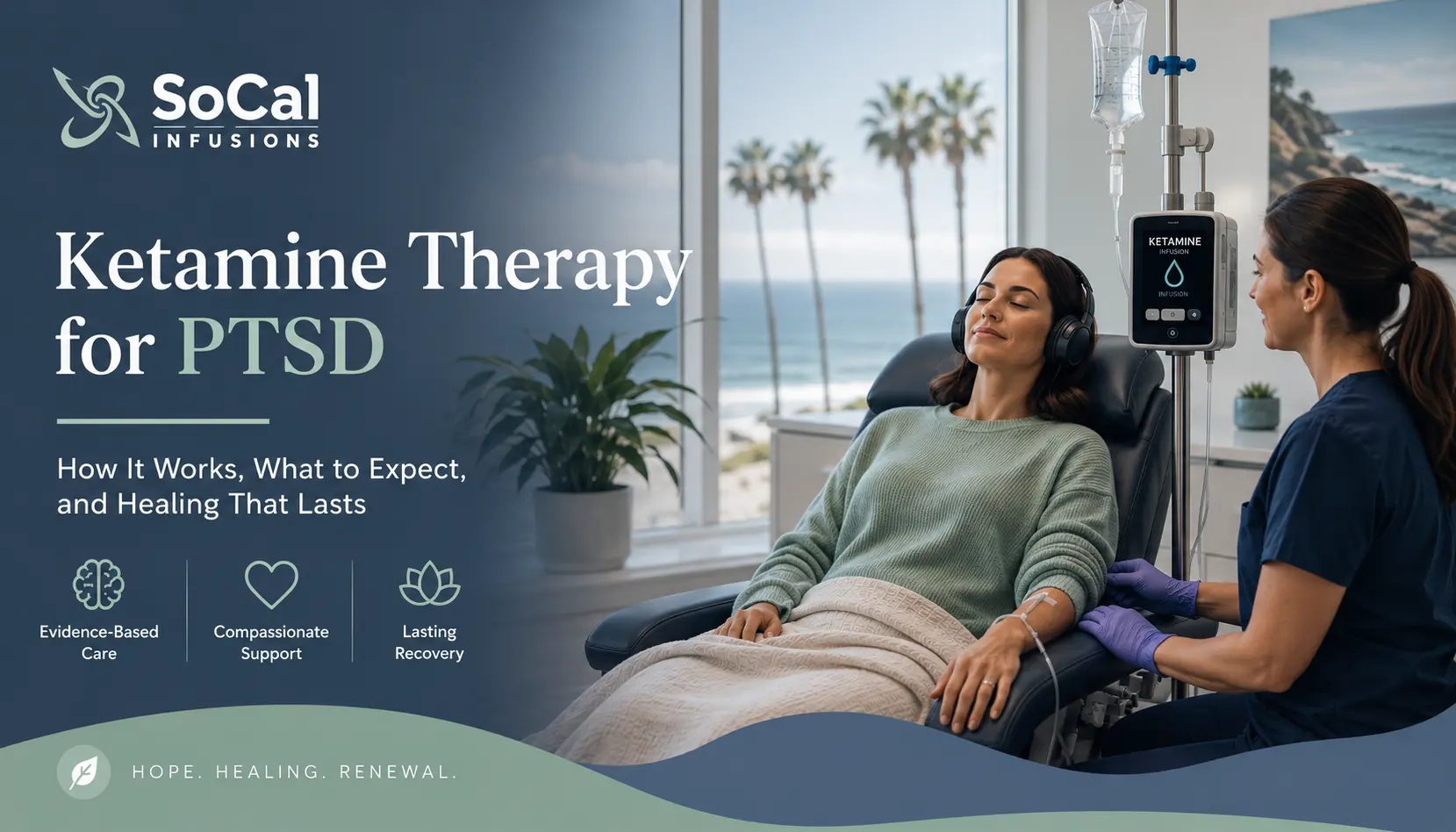
Ketamine therapy sessions are performed in a medically supervised clinical setting.
During treatment:
- Patients are carefully monitored
- IV ketamine is administered gradually
- The experience may feel reflective or dreamlike
- Temporary dissociation may occur
- Vital signs are observed throughout the session
For trauma patients, preparation and communication are especially important. Patients are encouraged to discuss concerns, triggers, or past dissociative experiences with the care team beforehand.
Some individuals also benefit from therapy or emotional integration support following treatment sessions.
The Importance of Trauma-Informed Care
Trauma-informed care recognizes that PTSD affects emotional safety, physical sensations, trust, and nervous system regulation.
At SoCal Infusions, the goal is not simply symptom reduction but helping patients explore treatment options in a supportive and medically responsible environment.
Trauma-informed treatment may include:
- Careful patient screening
- Education before treatment
- Emotional preparation
- Clear communication
- Personalized treatment planning
- Ongoing support and monitoring
Every patient’s trauma history and recovery journey are unique.
Safety Considerations for PTSD Patients
Ketamine can temporarily alter mood, perception, and emotional awareness. While this may feel beneficial for some individuals, it can also feel intense or emotionally activating for others.
Patients should openly discuss:
- Anxiety symptoms
- Panic history
- Dissociation
- Medication use
- Substance use concerns
- Safety concerns
- Trauma triggers
If a patient is experiencing a mental health emergency or suicidal crisis, emergency services or crisis resources should be used immediately.
For immediate support in the United States, call or text 988.
How SoCal Infusions Supports Patients in Southern California
SoCal Infusions provides medically supervised ketamine therapy and trauma-informed care for patients across Southern California.
The clinic works with individuals experiencing:
- PTSD symptoms
- Anxiety
- Depression
- Chronic pain
- Nervous system dysregulation
- Hyperarousal
- Trauma-related emotional distress
The team helps patients understand whether ketamine therapy, Stellate Ganglion Block (SGB), or another treatment path may align with their clinical goals.
Frequently Asked Questions
Can ketamine cure PTSD?
No. Ketamine is not considered a cure for PTSD. It may support selected patients as part of a broader treatment and recovery plan.
Does ketamine erase traumatic memories?
No. Ketamine does not erase memories. Some patients may experience changes in emotional processing or distress levels related to traumatic experiences.
Is ketamine therapy safe?
Ketamine therapy should only be performed under qualified medical supervision with proper patient screening and monitoring.
Can ketamine therapy be combined with counseling?
Yes. Many patients benefit from combining ketamine therapy with trauma-focused psychotherapy or mental health support.
Is SGB or ketamine better for PTSD?
They are different treatments targeting different systems. A qualified clinician can help determine which option may be more appropriate.
How quickly does ketamine work?
Some patients report symptom improvement within hours or days, while others may require multiple treatments or different treatment approaches.
Final Thoughts
PTSD is complex, and no single treatment works for everyone. For selected patients, ketamine therapy may offer another pathway to support trauma recovery, emotional flexibility, and nervous system regulation when traditional approaches have not provided enough relief.
The safest and most effective treatment plans are personalized, medically supervised, and integrated with ongoing mental health care.
If PTSD symptoms, trauma-related anxiety, or chronic hyperarousal are interfering with your daily life, SoCal Infusions can help you explore treatment options designed around your individual needs.
Schedule a Consultation with SoCal Infusions
Interested in learning whether ketamine therapy or Stellate Ganglion Block (SGB) may be appropriate for your symptoms?
Contact SoCal Infusions today to schedule a confidential consultation and explore personalized treatment options in Southern California.
This article is intended for educational purposes only and does not replace medical advice, diagnosis, or mental health treatment. Always consult a qualified healthcare professional regarding your medical concerns. If you are experiencing a crisis or emergency, seek immediate medical care or call 988 in the United States.