When Depression Treatment Starts to Feel Exhausting
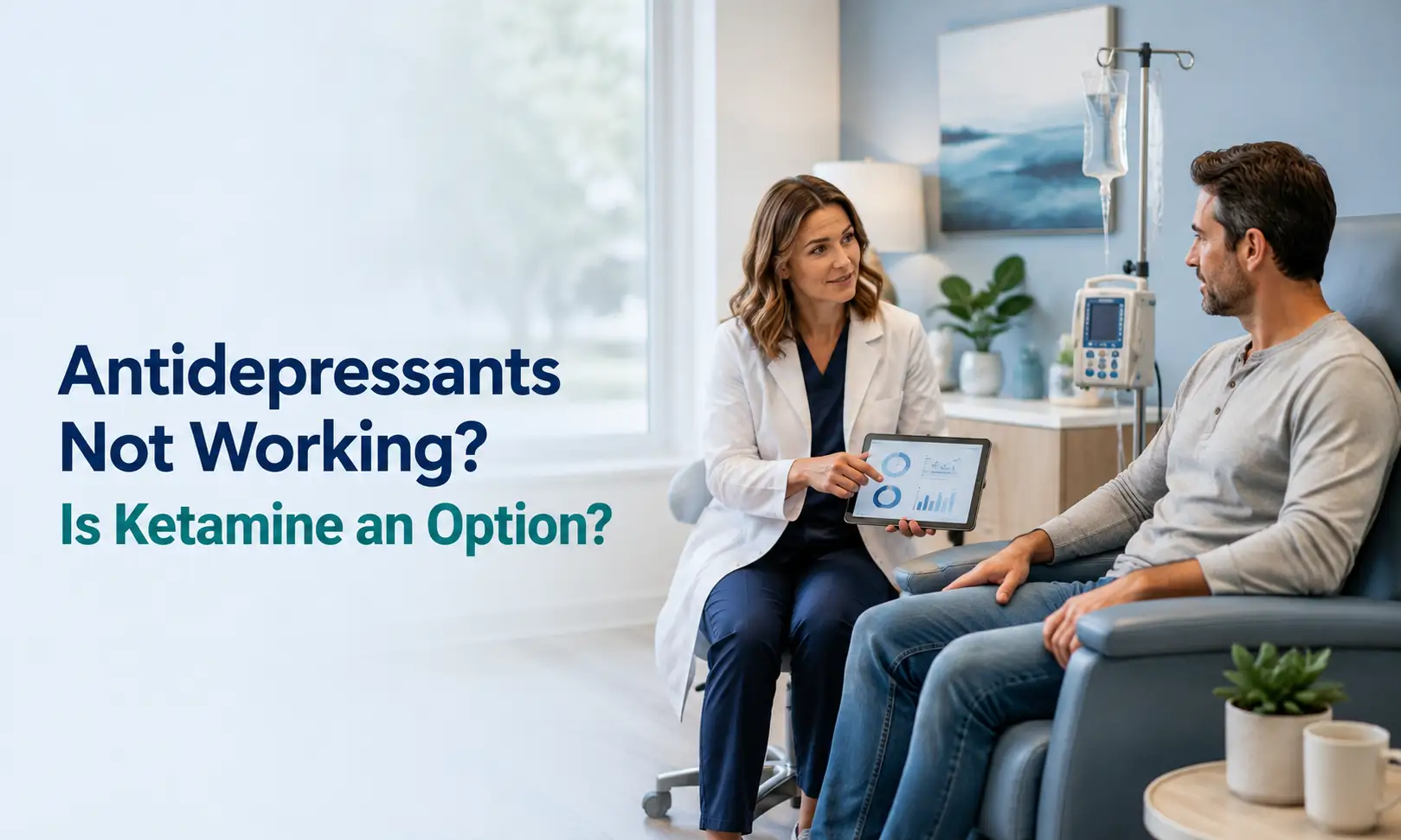
Antidepressants not working ketamine is a common search for people with treatment-resistant depression who are looking for alternative treatment options after traditional medications haven’t provided enough relief. If you’ve tried one or more antidepressants without enough relief, it’s normal to wonder what other treatments are available. Understanding how ketamine therapy works and who may benefit can help you make a more informed decision with your healthcare provider.
When depression does not respond well to standard antidepressants, patients may begin hearing the phrase treatment-resistant depression. This does not mean the person is hopeless or untreatable. It means the current treatment approach has not been enough and a different strategy may be worth discussing.
Ketamine therapy is one option that may be considered for selected patients whose depression has not improved adequately with standard care. At SoCal Infusions, ketamine is approached as a medically supervised treatment option that requires screening, education, monitoring, and realistic expectations.
When Antidepressants Are Not Working, Ketamine May Be Considered
Antidepressants can help many patients, but response varies. Some people experience meaningful relief. Others notice side effects without much benefit, partial improvement that fades, or no improvement after several attempts.
Signs your current depression treatment may not be enough include:
– Persistent low mood despite medication.
– Loss of interest or emotional numbness.
– Ongoing sleep disruption.
– Continued hopelessness or rumination.
– Difficulty functioning at work, school, or home.
– Multiple medication trials with limited benefit.
– Side effects that make treatment hard to continue.
– Depression returning quickly after brief improvement.
Many patients search for antidepressants not working ketamine when looking for alternative treatment options after limited improvement with traditional medications.
How Ketamine Is Different From Traditional Antidepressants
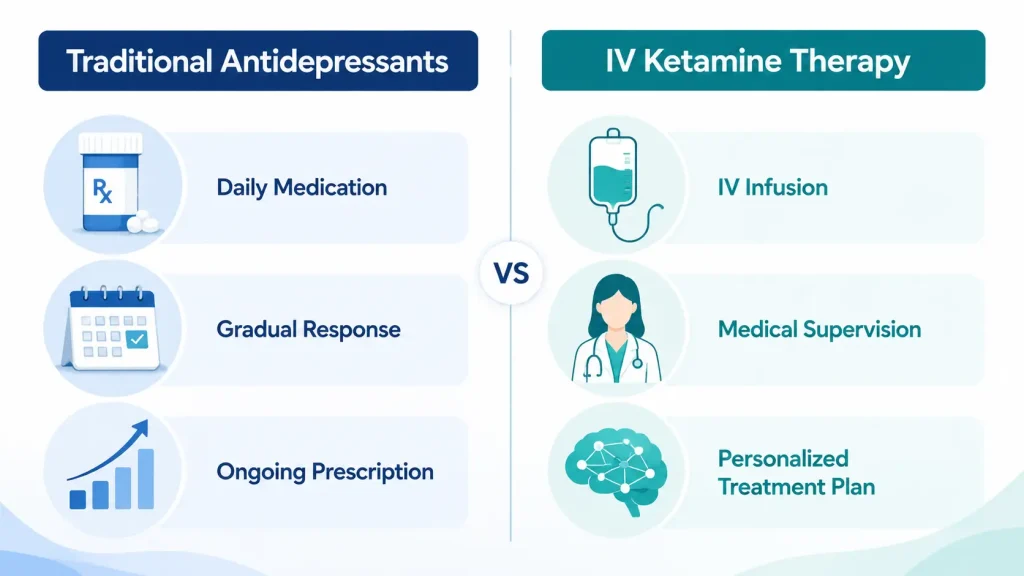
Many traditional antidepressants work by affecting serotonin, norepinephrine, or dopamine pathways. Ketamine works differently. It affects glutamate signaling and NMDA receptors, which are involved in neural communication, mood regulation, pain processing, and neuroplasticity.
This difference is one reason ketamine has received attention for treatment-resistant depression. Some patients who have not responded well to standard medications may respond to a treatment that works through a different pathway.
Ketamine is not a replacement for every antidepressant, and it is not appropriate for every patient. It should be considered as part of a broader care plan that may include therapy, psychiatric care, lifestyle support, medication management, and safety planning.
Who May Be a Candidate?
Ketamine therapy may be considered for adults with depression who have not received enough benefit from standard treatments. The evaluation should include review of diagnosis, prior medication trials, current medications, medical history, psychiatric history, and treatment goals.
Potential candidates may include patients with:
Treatment-resistant depression.
Major depression with limited response to standard care.
Depression with anxiety symptoms.
Depression overlapping with chronic pain.
Patients who are already working with a psychiatrist or therapist and need additional support.
Ketamine may not be appropriate for patients with certain medical or psychiatric risks, including uncontrolled blood pressure, active psychosis, uncontrolled mania, pregnancy, or serious substance use concerns. Screening is essential.
What to Expect From Treatment
Ketamine therapy is commonly planned as a series rather than a one-time appointment. During each infusion, patients are monitored in a clinical setting. The experience may feel dreamlike, dissociative, reflective, or calming. After treatment, patients should not drive and should plan time to rest.
Improvement may show up as:
Less heaviness or rumination.
More emotional flexibility.
Reduced hopelessness.
Improved energy or motivation.
Better ability to engage in therapy.
Improved function in daily life.
Response varies. Some patients notice early changes, while others need several sessions before patterns become clear.
Questions to Ask Before Starting Ketamine
Before beginning treatment, ask:
– Am I a good candidate based on my history?
– Should my psychiatrist or therapist be involved?
– How many treatments are recommended initially?
– How will we measure whether it is working?
– What side effects should I expect?
– Can I continue my current medications?
– What happens if I do not respond?
– What safety plan is in place if symptoms worsen?
FAQ: Antidepressants Not Working and Ketamine
Should I stop my antidepressant before ketamine?
Do not stop medication without guidance from your prescribing clinician. Medication decisions should be individualized.
How fast can ketamine help depression?
Some patients notice changes quickly, while others need multiple treatments. Response varies and should be measured over time.
Is ketamine a cure for depression?
No. Ketamine is not a guaranteed cure. It may be one treatment option within a larger care plan.
Can ketamine help if I have both depression and chronic pain?
Some patients with overlapping depression and chronic pain may be evaluated for ketamine therapy, but suitability depends on medical history and treatment goals.
What if I am having suicidal thoughts?
If you are in immediate danger or feel unable to stay safe, call 988 in the United States or seek emergency care now.
Conclusion: Not Responding Does Not Mean Out of Options
When antidepressants have not worked, it can feel discouraging. But treatment-resistant depression does not mean treatment is impossible. Ketamine therapy may offer a different pathway for selected patients, especially when provided with careful screening and medical supervision.
If antidepressants not working ketamine is a question you’re asking, schedule a consultation with SoCal Infusions to learn whether ketamine therapy may be appropriate for you.
This article is educational and does not replace medical advice. Depression can be serious and sometimes life-threatening. Seek emergency help for suicidal intent, severe worsening symptoms, or inability to stay safe.