

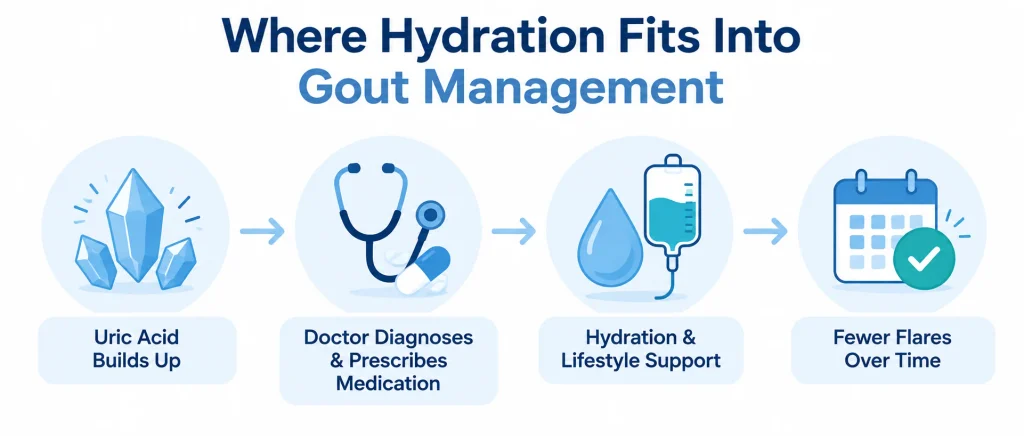
If you’re researching inflamed gout treatment options, it helps to start with what’s actually going on: gout is caused by a buildup of uric acid that forms sharp crystals in the joints, and the established treatment is medication, not IV therapy. That said, hydration plays a real, research-backed supporting role in gout management, and that’s worth understanding if you’re dealing with painful, inflamed joints and searching for relief options.
What Causes a Gout Flare
According to MedlinePlus, gout is a type of arthritis caused by a higher-than-normal level of uric acid in the blood. When uric acid builds up, it can form sharp crystals in a joint, most often the big toe, causing sudden, intense pain, swelling, redness, and warmth. Attacks frequently start at night and can resolve within days, though they tend to recur without treatment.
Risk factors include being male or a postmenopausal woman, drinking alcohol (especially beer), older age, obesity, diabetes, kidney disease, and certain medications including some diuretics.
Gout risk is also tied to broader health factors. According to NIAMS, metabolic syndrome, chronic kidney disease, high blood pressure, and conditions involving rapid cell turnover such as psoriasis can all raise urate levels and contribute to flares. Gout is common overall, shows up more often in men, and typically develops in middle age, though it tends to be more severe in the less common cases where it appears in younger people.
What Effective Inflamed Gout Treatment Looks Like
MedlinePlus outlines standard gout treatment as starting medication as soon as an attack begins, typically a nonsteroidal anti-inflammatory drug, colchicine, or a corticosteroid, to bring down the pain and inflammation. For people with recurring attacks, a doctor may prescribe daily medication to lower uric acid levels long-term and prevent future flares. Regular bloodwork to track uric acid levels over time helps a doctor confirm a treatment plan is working and adjust medication dosing as needed, which is part of why gout management tends to be an ongoing relationship with a physician rather than a one-time fix.
Where Hydration Fits In
Some research has linked higher water intake to a lower risk of elevated uric acid and fewer gout flares, likely because adequate hydration supports the kidneys’ ability to clear uric acid from the body. That said, hydration on its own is not considered a treatment for an active flare, and it isn’t a substitute for medication. It’s better understood as one of several lifestyle factors, alongside diet, weight management, and limiting alcohol, that may support the body’s ability to manage uric acid, without replacing the medications used to manage an active case.
Where IV Hydration and Wellness Support Can Fit
General IV hydration, along with nutrient support like magnesium or vitamin C, is something some patients explore as a comfort and hydration measure alongside their doctor’s actual gout treatment plan. For patients who struggle to keep up with fluid intake, especially during a flare when movement and daily routines are disrupted, this kind of support can be a reasonable addition. It is not a treatment for the gout itself, and it should never replace the uric-acid-lowering or anti-inflammatory medications your doctor prescribes.
Getting Inflamed Gout Treatment Help in Pasadena
If you’re dealing with a painful, swollen joint that could be gout, see a doctor for diagnosis and a treatment plan first, since inflamed gout treatment should always start with a medical provider. For general hydration and wellness support alongside your treatment, SoCal Infusions in Pasadena offers IV hydration appointments. Learn more on our IV Wellness page, or read about how we support patients managing chronic pain conditions more broadly.
Frequently Asked Questions
Does IV therapy cure gout?
No. Gout requires medical diagnosis and treatment, typically anti-inflammatory medication and, for recurring cases, daily uric-acid-lowering medication.
Can dehydration cause a gout flare?
Dehydration is considered a possible contributing factor, since concentrated urine may make it harder for the body to clear uric acid, though gout has multiple causes and risk factors.
What should I do during an active gout flare?
Contact your doctor, since prompt treatment with anti-inflammatory medication typically works best when started early in an attack.
Is IV hydration safe during a gout flare?
General IV hydration is generally considered low risk, but it should complement, not replace, the medication your doctor prescribes for the flare itself.
How much water should I drink if I have gout?
Ask your doctor for a specific recommendation based on your kidney function and overall health, since fluid needs vary by individual.
What foods should I avoid if I have gout?
Purine-rich foods, often from animal sources, along with alcohol and sugar-sweetened drinks, are commonly linked to flares. Ask your doctor or a dietitian for guidance specific to your situation, since triggers can vary by person.
Can gout be cured permanently?
There’s no outright cure, but with consistent treatment and lifestyle management, many people significantly reduce how often flares occur. Stopping medication without medical guidance often leads attacks to return.
Conclusion
Gout is manageable with the right inflamed gout treatment plan, and hydration is a reasonable, evidence-supported piece of the picture. If general IV hydration support sounds helpful alongside your doctor’s plan, SoCal Infusions in Pasadena is here to help.
This article is for educational purposes only and is not a substitute for medical advice. Consult a qualified healthcare provider for diagnosis and treatment of gout.