
Similar Names, Different Treatment Models
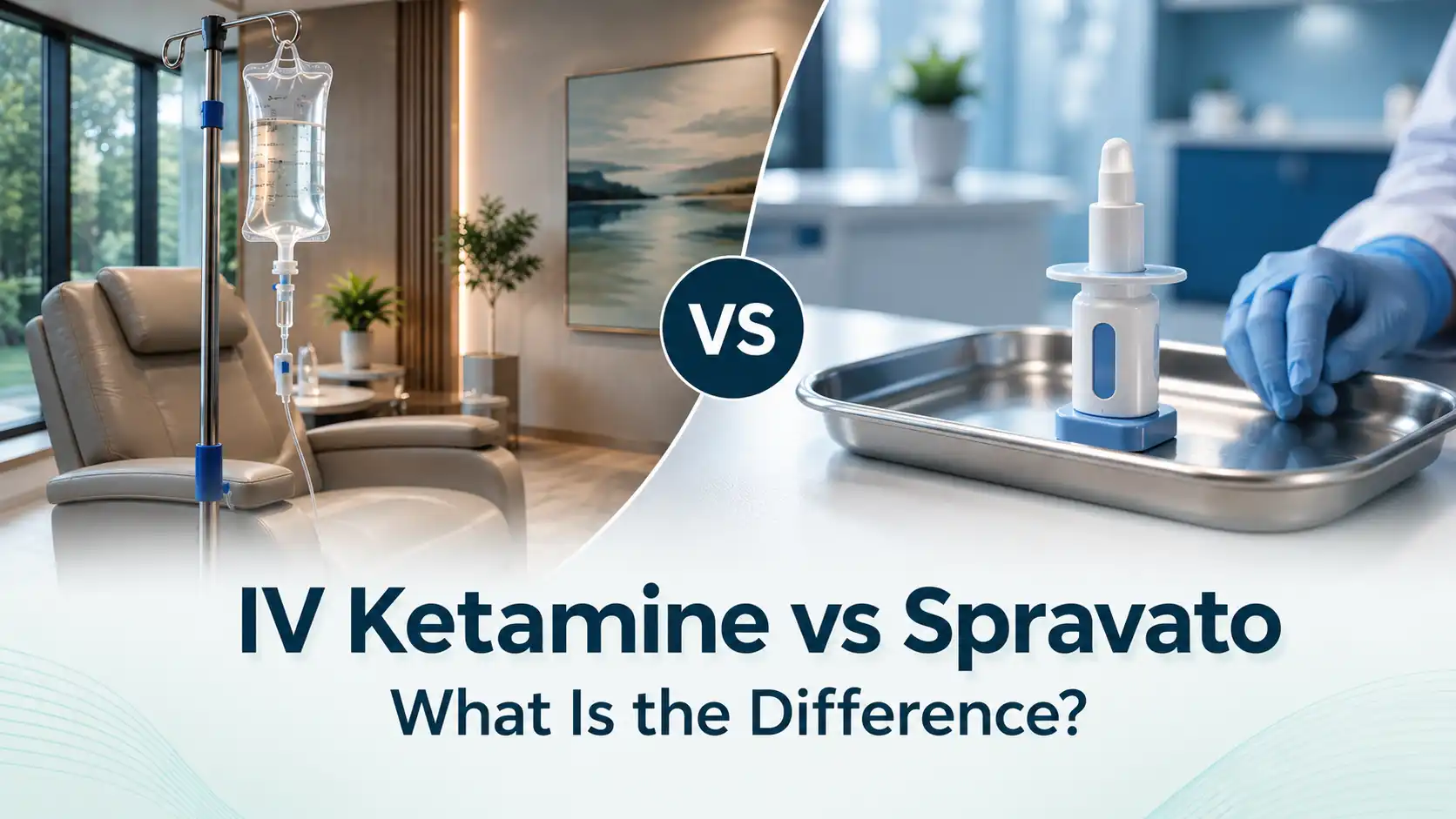
IV Ketamine vs Spravato is one of the most common comparisons patients make when researching treatment-resistant depression. Although both treatments are ketamine-based, they differ in medication type, FDA approval, administration, monitoring, insurance coverage, and the overall treatment experience.
For patients with treatment-resistant depression, understanding the distinction can make the decision process less confusing. At SoCal Infusions, patient education is an important part of deciding whether ketamine-based care may be appropriate.
What Is IV Ketamine Therapy?
IV ketamine therapy uses ketamine administered through an intravenous infusion in a medically supervised setting. The IV route allows the care team to control timing and dose carefully while monitoring the patient throughout treatment.
IV ketamine is commonly discussed for treatment-resistant depression, anxiety, PTSD, chronic pain, fibromyalgia, CRPS, neuropathic pain, and other complex conditions. For many mental health uses, IV ketamine is considered off-label, which means it may be used by clinicians based on medical judgment even though it is not FDA-approved specifically for that indication.
What Is Spravato?
Spravato is the brand name for esketamine nasal spray. Esketamine is related to ketamine but is not identical to racemic ketamine used in many IV infusion settings. Spravato is FDA-approved for certain adults with treatment-resistant depression and for depressive symptoms in adults with major depressive disorder with acute suicidal ideation or behavior, when used under the approved program and clinical criteria.
Spravato is administered in a certified medical setting and requires monitoring after dosing. Patients do not take it home and use it independently.
IV Ketamine vs Spravato: Key Differences
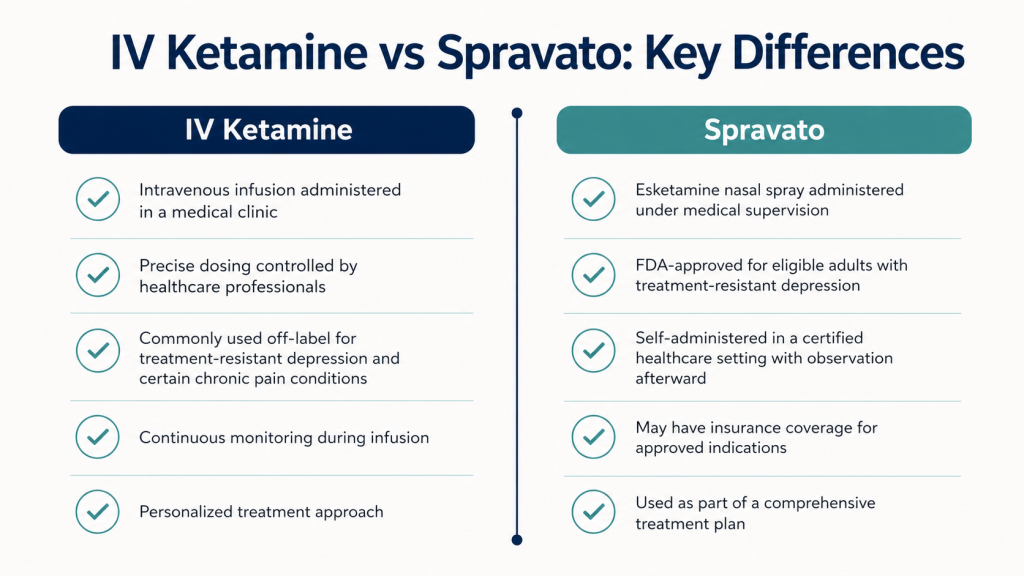
The most important differences include:
Medication form: IV ketamine is infused into the bloodstream; Spravato is a nasal spray.
Regulatory status: Spravato has FDA-approved indications; IV ketamine is often used off-label for mental health conditions.
Administration: IV ketamine is delivered through an IV; Spravato is self-administered under supervision in clinic.
Dosing control: IV infusion allows precise control over infusion rate and dose adjustments.
Insurance: Spravato may be more likely to have insurance pathways for approved indications, while IV ketamine is often self-pay.
Treatment experience: IV ketamine may create a more controlled infusion experience; Spravato has its own monitoring and side effect profile.
Conditions treated: IV ketamine may be considered for certain chronic pain conditions; Spravato is focused on approved depression indications.
IV Ketamine vs Spravato: Which Option Is Better?
There is no universal answer. The better option depends on diagnosis, medical history, treatment goals, insurance coverage, prior medication response, safety factors, and provider recommendation.
Spravato may be considered when a patient meets the approved criteria and has access through a certified treatment program. IV ketamine may be considered when a clinician believes infusion therapy is appropriate, especially when symptoms are complex, involve pain, or when an individualized infusion approach is preferred.
What Patients Should Ask
Before choosing a treatment path, ask:
- Am I a candidate for IV ketamine, Spravato, or both?
- Which option fits my diagnosis?
- What monitoring is required?
- How many sessions are usually needed?
- What side effects should I expect?
- What does insurance cover?
- What happens if I do not respond?
- How will this coordinate with therapy or psychiatric care?
Safety and Monitoring
Both treatments require medical supervision. Ketamine-based treatments can temporarily affect blood pressure, perception, sedation, coordination, and emotional state. Patients should not drive after treatment and should follow all clinic instructions.
Patients with certain medical conditions, medication interactions, substance use concerns, or psychiatric risk factors may need additional review before either treatment.
How SoCal Infusions Helps Patients Decide
SoCal Infusions helps patients understand ketamine therapy in context. The goal is not to push one option for everyone, but to evaluate whether infusion-based treatment makes sense for the patient’s symptoms, history, and goals. When another treatment path is more appropriate, patients should be guided honestly.
FAQ: IV Ketamine vs Spravato
Spravato is esketamine, which is related to ketamine but not identical to IV racemic ketamine.
IV ketamine is commonly used off-label for depression. Off-label use should be discussed carefully with a qualified clinician.
No. Spravato must be administered under supervision in a certified medical setting.
Response varies. Some patients may notice changes quickly with ketamine-based treatments, while others need multiple sessions.
That depends on your diagnosis, response, safety profile, and provider recommendation.
Conclusion: The Best Choice Depends on the Patient
IV ketamine and Spravato are both ketamine-based treatments, but they differ in medication form, regulatory status, administration, insurance pathways, and clinical use. Patients should make the decision with a provider who can explain both the potential benefits and limitations.
If you are comparing IV ketamine and Spravato for treatment-resistant depression or related symptoms, schedule a consultation with SoCal Infusions to discuss whether IV ketamine therapy may be appropriate.
This article is educational and does not replace medical advice. Treatment eligibility, safety, and insurance coverage vary by patient and should be reviewed with qualified healthcare professionals.